

How To Cut After A Clean Bulk Without Losing Muscle
When most people talk about trying to lose weight, what they are really trying to do is lose fatty. The trouble is, that requires non losing muscle—which your trunk naturally does when you're in a caloric arrears. And a caloric arrears is a requisite for fat loss; y'all tin't lose fatty without taking in fewer calories than you fire per day, says Abbie Smith-Ryan, director of the Applied Physiology Laboratory at University of North Carolina at Chapel Hill. "If you reach a caloric deficit to lose weight solely by cut calories, you volition lose a similar percentage of weight from fat as from muscle," adds Heather A. Milton, senior practise physiologist at NYU Langone's Sports Functioning Eye. Which could make dieting even less attractive than it was earlier. Meanwhile, a caloric surplus—eating more calories than you burn per day—is required to build muscle. Think of building muscle similar laying bricks: If you want to build it up, you're going to need more bricks. Just and then again, nosotros get back to the problem of needing to go remove bricks, Jenga-style, for weight loss. "Nevertheless, you tin can manipulate the fashion the two types of body tissue, fat and musculus, are being lost during a caloric deficit past creating that deficit in a different manner," Milton says. These strategies of manipulation are plentiful—and while each helps on its own, they are most powerful when performed in concert. Hither are the steps you should take. Cut fewer calories Maintenance calories are the number of calories yous need to eat per twenty-four hours to maintain your weight at whatsoever given time, factoring in things like exercise, which we'll get to later. While the most authentic manner to decide how many calories you burn down per day is to spend 24 hours in a laboratory's metabolic chamber—a room that measures the ratio of carbon dioxide in the room— the Mayo Clinic has an online tool for roughly estimating your maintenance calories. (Cull "I Want to Maintain My Current Weight.") Multiply that number by 0.75, and that'southward a pretty proficient target for losing weight slowly, he says. That's right: A small caloric deficit will help you lose weight slowly, which volition assistance reduce the amount of fat-gratuitous mass that you lose, Campbell says. For example, in one study, athletes either lost 1.iv pct of their body weight per week (for a 200-pound person, that would equal ii.8 pounds per week) or 0.7 per centum of their body weight per week (for the aforementioned 200-pound person, that would equal 1.4 pounds per week). Both groups lost the same amount of total weight, but while the fast weight-loss grouping lost 7 pounds of fat and 0.66 pounds of lean mass, the slow weight-loss grouping lost 11 pounds of fatty and gained 2 pounds of lean mass. Perform total-body force grooming. However, while strength training is most famous for edifice musculus while in a caloric surplus, myriad studies prove that resistance preparation is effective at attenuating declines in musculus mass when in a caloric deficit. Milton explains that, dissimilar aerobic exercise, strength preparation—especially heavily-loaded strength preparation—primarily recruits type ii muscle fibers, which contribute to muscle mass preservation and gains. Force training too triggers the curt-term production of hormones such as human growth hormone and testosterone that aid in muscle retention and building.
Obviously, if just cut calories is going to issue in so much muscle loss, you want to back away from any low-calorie diet. "In general a female should reduce calories past about 300 to 400 calories and males virtually 400 to 600 calories," says Bill Campbell, director of the Performance and Physique Enhancement Laboratory at the University of South Florida. "A better way to approach this is to determine what one's maintenance calories are, and and then reduce this amount by approximately 25 percent."
"The type of exercise you select is very important," Milton says. "Cardiovascular practise works on aerobic muscle fibers, which will increase oxygen extraction, merely not necessarily change musculus mass. And you may nevertheless lose muscle mass if that's the only style you're trying to lose weight."
More from Tonic:
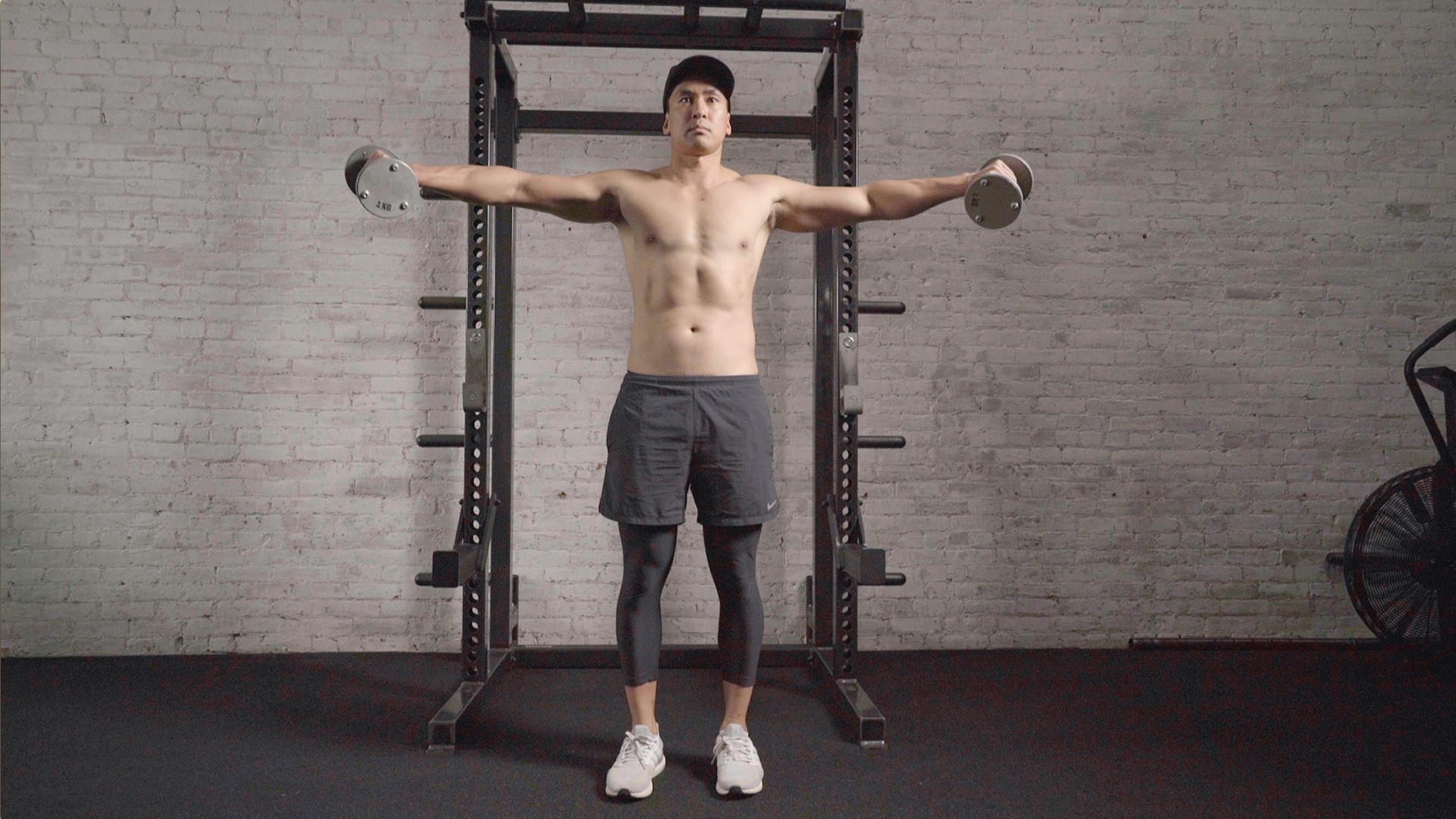
"At a minimum amount, people should perfect whole-body resistance training iii days per week," Campbell says. "Ideally, however, they should force train five to six days per week, splitting their schedule into upper-body days and lower-body days." What's more, to make sure that you are optimally stimulating muscle growth, Smith-Ryan recommends performing loading exercises with roughly 80 percent or more of your 1RM, or the max weight that you could lift for ane rep. Aim to perform half dozen to 8 reps of each do in your workout routine, staying on the lower end for chemical compound exercises and the higher finish for unmarried-articulation isolation work. Maintain or increment protein intake
When cutting calories, 9.9 times out of 10, none of them should come from protein. "Poly peptide is the nutritional stimulus for building muscle," Campbell says. "During a diet, it serves as the nutritional stimulus for maintaining muscle. Protein is likewise the most satiating nutrient—itmakes you lot feel full longer—and it is the least likely nutrient to be stored every bit fat even when eaten in backlog. All of these things [brand protein] a dieter'south best friend." For instance, in one study of men who were both cutting calories and exercising, those who followed a high-protein nutrition lost ten.56 pounds of fat and gained 2.64 pounds of muscle. Meanwhile, those who followed low-protein diet with the same number of total calories lost 7.7 pounds of fat and gained less than a quarter pound of muscle. How much protein you demand per day depends on multiple factors, but a 2022 review concluded that, for optimal muscle growth, people should swallow betwixt 0.4 to 0.55 grams of poly peptide per kilogram of their torso weight at every meal. "Providing a dose of xxx to forty grams of protein every three to four hours would very rarely be a negative beyond the lath," adds Republic of chad Kerksick, director of the exercise and performance nutrition laboratory at Lindenwood University in St. Charles, Missouri. Pay attending to carbs Smith-Ryan explains that you don't need to go as low as the study did retain muscle mass while losing fatty, though. She says an easy 2:1 ratio is platonic. And so nevertheless much protein you eat (encounter above), eat double the number of grams of carbs. Do high-intensity intervals With the right work-to-rest ratio, HIIT can fifty-fifty build muscle. Smith-Ryan's research, published in the Journal of Science and Medicine in Sport constitute that, over the course of a iii-calendar week training program, people who exercised at a ane:ane ratio gained significantly more muscle than those performing two:1 intervals. For every 2nd you spend sprinting, spend that much resting earlier your next bout. Rethink pre-conditioning carbs and mail-workout protein And while pre-workout carbs are linked to ameliorate, harder workout performances, inquiry shows that even pre-conditioning poly peptide can be beneficial. In ane study, eating 18 grams of whey protein (with 2 grams of carbs and one.5 of fat) twenty minutes before a heavy resistance training session increased energy expenditure up to 24 hours after exercising compared to eating 19 grams of pre-workout carbs (with 1 gram of protein and 1 gram of fat). Prioritize recovery "Cortisol, an inflammatory hormone, increases in times of sleep impecuniousness or also niggling sleep," she says. Cortisol in chronically too-high levels tin can both inhibit weight loss and promote musculus degradation. Meanwhile, homo growth hormone—which aids in muscle synthesis—peaks at dark during sleep, she says. For instance, in one University of Chicago-led study, when dieters got simply 5.5 hours versus 8.5 hours of sleep per night, their rate of fatty loss declined past 55 percent—even though they were following the same diet. And, according to research published in Diabetologia, as little as four days of sleep deprivation reduces the body'south insulin sensitivity, increasing the chance for fat storage, while reducing the body's levels of growth hormone. Sign upwardly for our newsletter to get the best of Tonic delivered to your inbox.
A low-carbohydrate nutrition is unnecessary for weight loss, and may even impair muscle maintenance and potential growth by limiting exercise performance, Milton says. However, in one written report from the Academy of Illinois at Urbana-Champaign found that when women followed a 1,700-calorie nutrition for x weeks, those who maintained a i.4:1 carbohydrate-to-protein ratio (171 grams of daily carbs 125 of protein) lost more fat while losing less lean mass (aka muscle) than those who maintained a 3.v:ane saccharide-to-protein ratio.
High-intensity interval training—such as sprints on the treadmill or stationary bike—is constructive at called-for calories both during exercise and afterwards through excess postal service-exercise oxygen consumption, Milton says. And, unlike steady-country cardio, it recruits type-two muscle fibers over type-1s, meaning information technology guards against musculus loss.
Fortunately, the anabolic window (the time period later resistance training to which the body uses protein to build muscle) is actually much larger than previously believed, per one contempo written report. So as long as you're getting in regular doses of protein, drinking a protein shake immediately afterwards your conditioning probably isn't necessary.
Active recovery from exercise helps you get the well-nigh out of every workout, but the most of import form of recovery that none us seem to get enough of is sleep, Milton says. She notes that the corporeality of sleep yous go also impacts whether or not you lose musculus as you lose fat—largely by influencing hormone levels.

Source: https://www.vice.com/en/article/d3ewwy/how-to-lose-fat-without-losing-muscle
Posted by: carrollkhorde.blogspot.com
0 Response to "How To Cut After A Clean Bulk Without Losing Muscle"
Post a Comment